

Referrals Are the Growth Channel Most Operators Are Leaving on the Table
SHARE


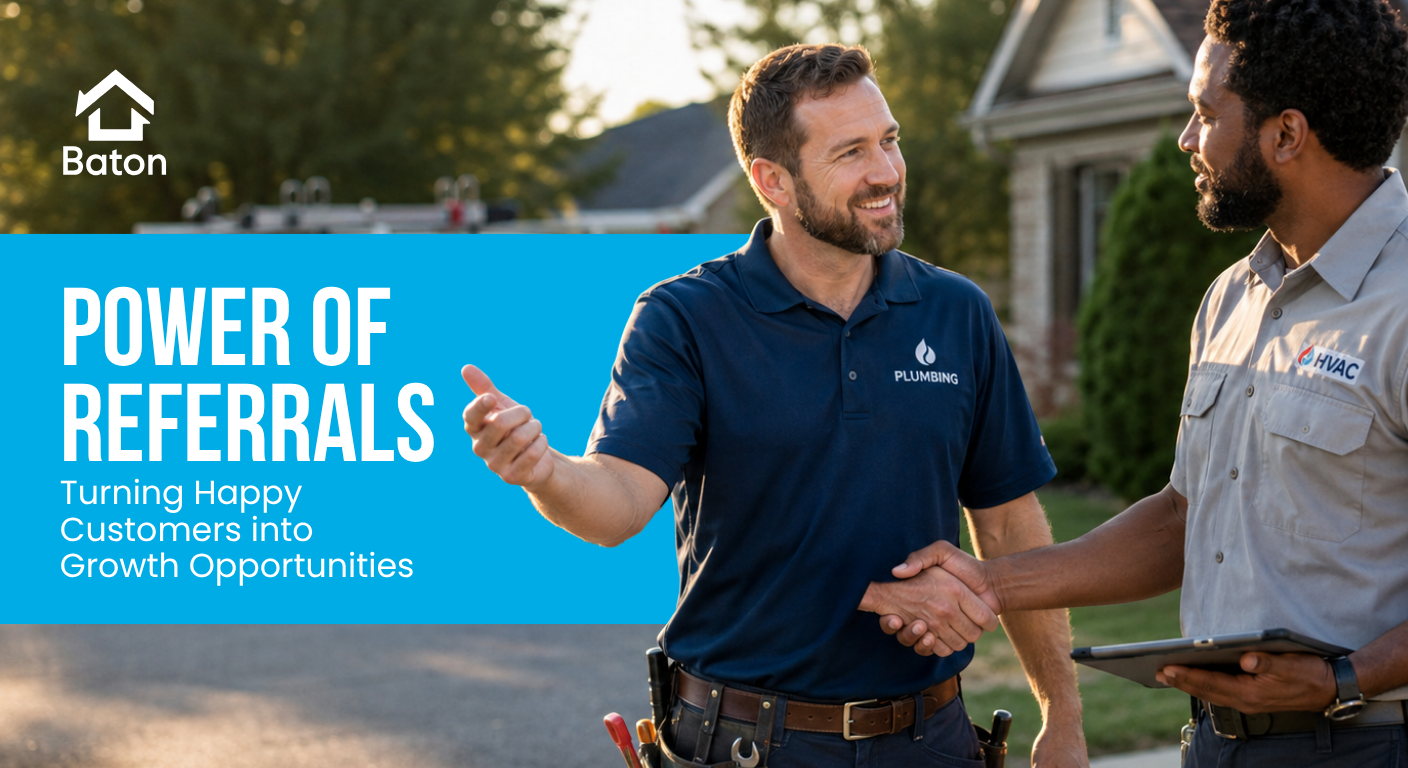
Every pest, wildlife, and lawn care operator turns away work. Wrong ZIP code. Wrong service. Fully booked. A critter nobody on staff is set up to handle. Most of the time, the caller just disappears, maybe with a "try Googling someone else" on the way out.
That's the problem Voice for Pest dug into on its June 24 webinar, The Power of Referrals: Turning Happy Customers into Growth Opportunities. Our own Evan, Baton's Head of Growth, attended the session, joining Clicki co-founder Kendall Hines to make the case for referrals as an acquisition channel operators haven't systematized yet, and to walk through how two different pieces of that puzzle fit together.
Here's the recap, and what it means if you're one of those operators.
The Trust Problem Every Other Channel Has
Referred prospects show up already trusting you. That's not a soft benefit; it cuts a real chunk of the sales conversation before the phone even rings. Paid search and shared lead aggregators can't replicate that; a referral from another pro, or from a customer's own network, carries credibility no ad ever will.
The problem has never been whether referrals work. It's that most companies have never built a system around them. They stay informal, unpaid, and unmeasured, which means they don't scale.
Turn the Calls You Can't Take Into Revenue
Baton's whole model starts with the call you were already going to lose. Evan walked the audience through exactly how it works:
- You forward the caller to a dedicated number.
- Baton's call center verifies the ZIP code, the service need, and the residence type.
- Baton matches the caller to a vetted pro in the network who actually covers that ZIP code and job type.
- You get paid for the referral.
Because it's exclusive, no shared leads, no race to call first, no competitor undercutting your price on the same job, a referral into Baton is worth more than a name shared off the top of your head. And plenty of partners leave what they earn sitting in Baton and spend it right back on inbound referrals, effectively turning declined calls into free lead generation for the categories they do want.
A few numbers Evan shared during the session:
- ~800 pros are already on the Baton platform
- Referrals close at roughly 50% lower cost than a typical paid-lead alternative
- Baton's biggest referring partners earn tens of thousands a month; smaller owner-operators typically see anywhere from a few hundred to around $1,000 a month
And on the receiving side, there's no platform fee, no monthly minimum, and referring out is free. Getting set up takes about 30 minutes.
The Pledge to Protect
The single biggest hesitation operators raise about referring a job out is: What if that company tries to poach my customer? Evan's answer is the Pledge to Protect: if you refer a customer for a service you can't provide, the company receiving that referral is barred from pitching that customer on the service you already handle. Violate it, and there's a financial penalty. As Evan put it on the call, violations are rare, but the concern comes up constantly, which is exactly why the policy exists and gets enforced.
The Other Half: Turning Customers Into a Referral Channel
Clicki's angle is different: it's built around your existing customers, plus partners, influencers, and staff, referring people in. Kendall's core argument: cash rewards paid instantly beat account credits every time, both for the person doing the referring and for your office staff who'd otherwise be manually applying credits through a CRM that doesn't support it well.
The structure Kendall pointed to as the strongest performer: two-sided offers, where the referrer gets cash and the new customer gets a discount. Alta Pest Control's version of that, $100 cash, $100 off, has reportedly driven $250,000 to $300,000 in new revenue for them.
What to Do With This
If you walked away from the session without a next step, here's where to start:
- Pull a month of call data. Count how many calls you turned away for area, service, or capacity reasons; that number is the size of your Baton opportunity.
- Audit your current referral program, if you have one. If it runs on account credits, check how many of those actually got applied last quarter.
- Model a two-sided cash offer against what you're currently spending to acquire a customer through paid channels.
Referrals aren't a nice-to-have extra. They're calls you're already getting and already losing. The only question is whether you're set up to keep them.
Ready to see what your declined calls are worth? See How It Works to get started with Baton.
You may also like

.png)


Subscription successful! Stay tuned for the latest from Baton Referrals.
Oops! Something went wrong while submitting the form.
